
Sourcing Guide · 2026
How to evaluate research peptides before you order
A practical reference for research labs. Four checks that separate verifiable research material from research-grade marketing, backed by USP guidance and the published quality standards for synthetic peptides.
Updated April 2026
9 min read
USP-aligned
Verified for purity & identity · prior to distribution
In this guide
Purity standards
Identity by mass spec
Common impurities
Storage & transit
Supplier audit
01
Purity: what "98% pure" actually measures
The standard analytical method for synthetic peptide purity is reversed-phase high-performance liquid chromatography (RP-HPLC), typically with a C18 column and UV detection at 214 nm, the wavelength where peptide bonds (amide bonds) absorb most strongly[2]. The output is a chromatogram in which each component is integrated by area, and “98% purity” means 98% of the detected area corresponds to the target peptide.
What the published guidance recommends
Reference standards published by USP follow a two-step process: bulk material purity is determined by measuring all detectable impurities (peptide-related impurities, counter ion, residual solvents, water, non-combustible residues) and subtracting from 100%[1]. For most research-grade applications, cell-based assays, receptor binding, signalling studies, ≥98% HPLC purity is the accepted floor[1]
What to ask the supplier
— What is the HPLC method (column, wavelength, gradient)?
— Is the purity stated per batch, or as a typical or average value?
— Can I see the actual chromatogram, not just the percentage?
“Three batches of BPC-157, three identical mass spec results. Reproducibility is the only thing that matters when you’re trying to publish.”
L. Tanaka
★★★★★
02
Identity: HPLC tells you "how much," MS tells you "what"
HPLC purity does not confirm identity. A peptide can be 99% pure and still be the wrong molecule, chromatography measures the proportion of target peptide in the sample, not the molecular structure. Identity is confirmed by mass spectrometry, typically electrospray ionization MS (ESI-MS), which reports the actual molecular weight of the dominant species in the sample[1].
A complete certificate of analysis pairs the two: HPLC chromatogram (purity) plus MS spectrum (identity), both tied to the batch number you’re buying. If a supplier provides one without the other, the COA is incomplete by the published standard.
●
Common in market
“≥95% purity” stated on a generic spec sheet, with no batch-specific HPLC chromatogram or mass spectrum attached. Researchers receive a number, not a document.
●
Verifiable standard
Batch-specific HPLC chromatogram and ESI-MS spectrum, both tied to the lot number on the vial. Purity and identity confirmed independently per batch.
Want this standard for your lab?
03
Impurities: what's in the 2% you don't see
Synthetic peptides are produced by solid-phase peptide synthesis (SPPS), most commonly using the Fmoc/tBu strategy[3]. SPPS produces predictable byproducts, and a literate research lab knows what to watch for:
— Truncation sequences, chains missing one or more terminal residues. These can compete for the same binding sites as the intact peptide and confound dose-response data.
— Deletion sequences, chains missing internal residues. Harder to detect by purity alone; show up clearly on MS.
— Oxidized variants (+16 Da per oxidized residue) and deamidated variants (+1 Da). Common with methionine, cysteine, glutamine, asparagine residues.
— Trifluoroacetic acid (TFA) salts, residue from the SPPS cleavage step. TFA is well-documented to interfere with cell-based assays and can be cytotoxic at concentrations that don’t show up on HPLC[3].
None of these are exotic, they’re the standard impurity profile of SPPS-produced peptides. The question for a supplier isn’t whether they exist, it’s whether they characterize and quantify them, or whether the COA reports a single purity number with no breakdown of the rest.
“I’ve worked with five other suppliers in this category. Lab X is the only one where ‘qualifying institution’ actually means something on the documentation side.”
P. Boucher
★★★★★
04
Storage and transit: the spec is fragile
Lyophilization (freeze-drying) reduces the residual moisture in a peptide sample to under 1%. This is the most important single factor in peptide stability, because virtually all significant degradation pathways, hydrolysis, deamidation, oxidation in solution, require water as a reactant or medium[4]. Stored intact at −20°C, properly lyophilized peptides typically maintain stability for 12-24+ months[4].
The transit risk most labs underweight
Heat is the obvious risk, every 10°C rise approximately doubles the rate of chemical degradation in most peptides[4]. But moisture ingress through a compromised seal is often the bigger threat: a vial with a failed seal exposed to ambient humidity for 24 hours can degrade more than an intact vial that briefly hits 45°C in transit[4].
For short shipping windows (1-3 days) with proper sealing and packaging, full cold-chain logistics may not be strictly required[4]. For longer transit, cold packs or dry ice with insulated packaging is the published recommendation. The non-negotiable is the seal: vacuum-sealed, intact, vial integrity verifiable on arrival.
See how Lab X ships and stores
05
The 30-minute supplier audit
Before placing a first order with any new supplier, work through the following five questions. If a supplier can’t satisfy them with documentation, not assertions, it’s a hidden variable in your study design.
— Is the HPLC chromatogram for my specific batch available before I order?
— Is mass spectrometry confirming molecular identity included on the same COA?
— Is the testing third-party, or in-house only?
— Is the COA archived and retrievable a year from now if I need to defend my methodology?
— Is the material lyophilized and vacuum-sealed, with stated storage and shipping protocols?
None of these questions are aggressive. They’re the floor of what the published quality guidance for synthetic peptides considers complete documentation. Any serious supplier will answer them in seconds.
“Customer support understood my methodology question without making me explain the assay first. That’s not a small thing in this category.”
A. Westbrook
★★★★★
Who Lab X serves
Research teams across Canada
Our catalog is open to qualifying research institutions and verified independent researchers, every order goes out with the same documentation standard.

Independent research professionals
Solo researchers running independent projects.

Biotech research teams
In-house R&D groups requiring documented inputs.
Private laboratories
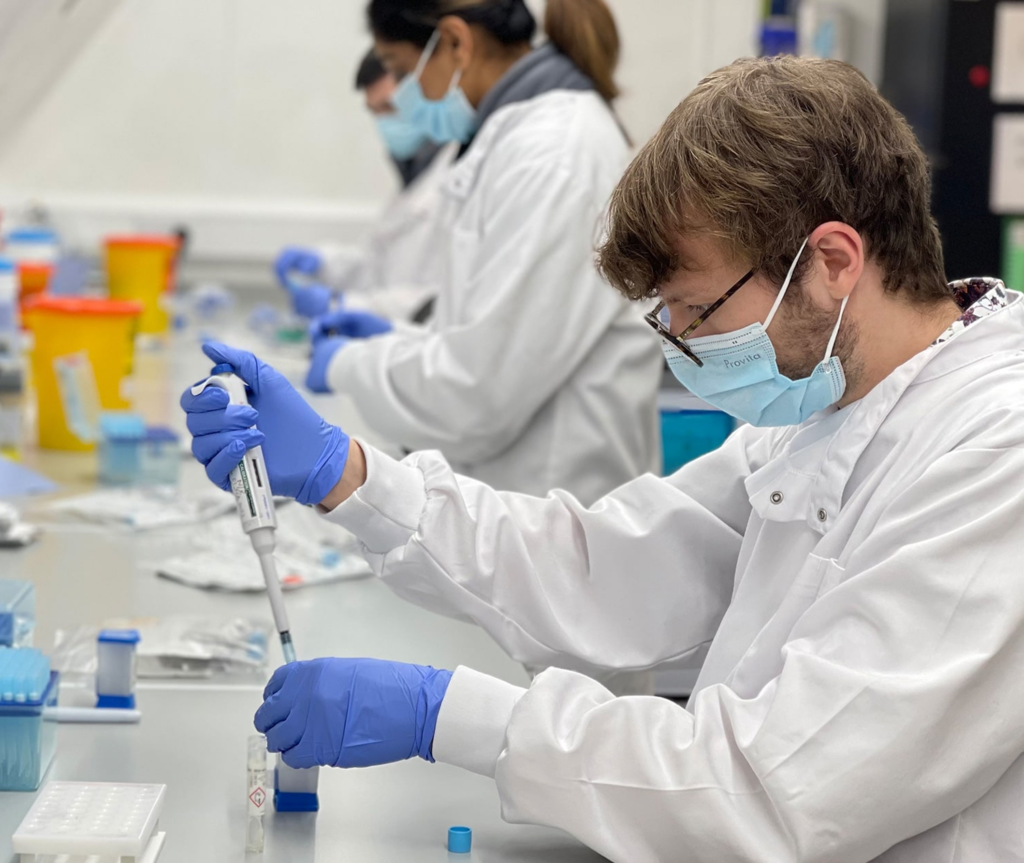
Contract and specialty labs serving multiple clients.

Academic researchers
University labs running longitudinal studies.
Who Lab X serves
Documentation as the default, not the upsell.
Lab X Peptides supplies high-purity research peptides and compounds to laboratories and research professionals across Canada. Every product is supplied lyophilized, vacuum-sealed, and verified for purity and identity prior to distribution.
We work with independent testing laboratories, so the COA isn’t ours, it’s confirmed by a third party.
≥98% HPLC purity
Reversed-phase HPLC at 214 nm, batch by batch.
Independent testing
COAs from third-party labs, available to qualifying institutions.
Mass spec identity
ESI-MS confirming molecular weight per batch.
Lyophilized + vacuum-sealed
Shipped in clearly labelled vials, packaged for transit stability.
A few of the compounds in our catalog
Every product supplied lyophilized in clearly labelled vials. Verified for purity and identity prior to distribution.
BPC-157
Ipamorelin
CJC-1295
GHK-Cu
DSIP
References
- D’Hondt, M. et al. Reference Standards to Support Quality of Synthetic Peptide Therapeutics. Pharmaceutical Research / USP. pmc.ncbi.nlm.nih.gov/articles/ PMC10338602
- Bachem Knowledge Center. Solid-Phase Peptide Synthesis (SPPS) Explained. bachem.com
- Gyros Protein Technologies. Peptide Purity & Yield Optimizing in SPPS. gyrosproteintechnologies.com
- Sigma-Aldrich. Handling and Storage Guidelines for Peptides and Proteins. sigmaaldrich.com
See the standard in practice.
Browse the Lab X catalog, every batch is third-party tested with documentation available to qualifying institutions.